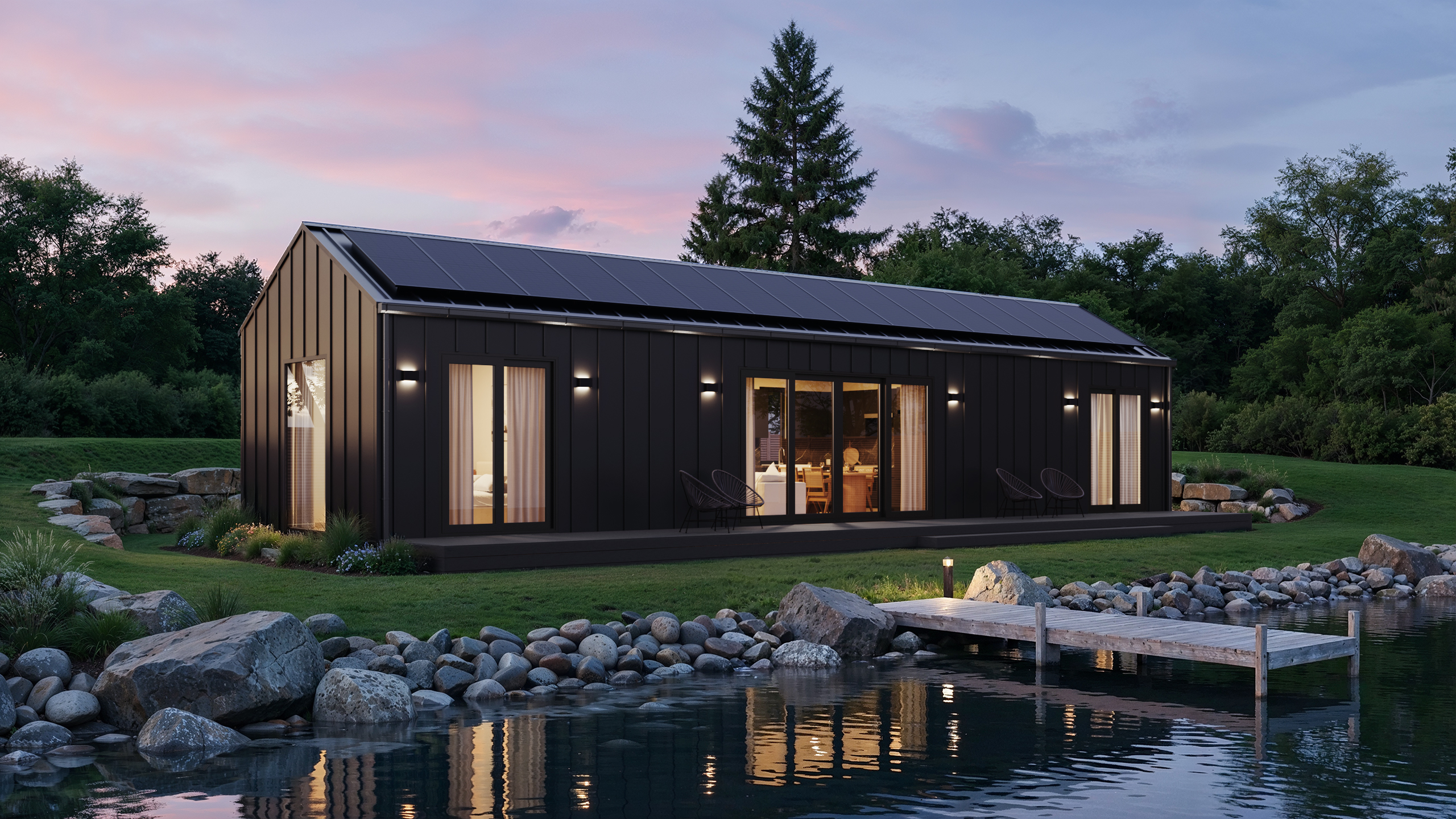
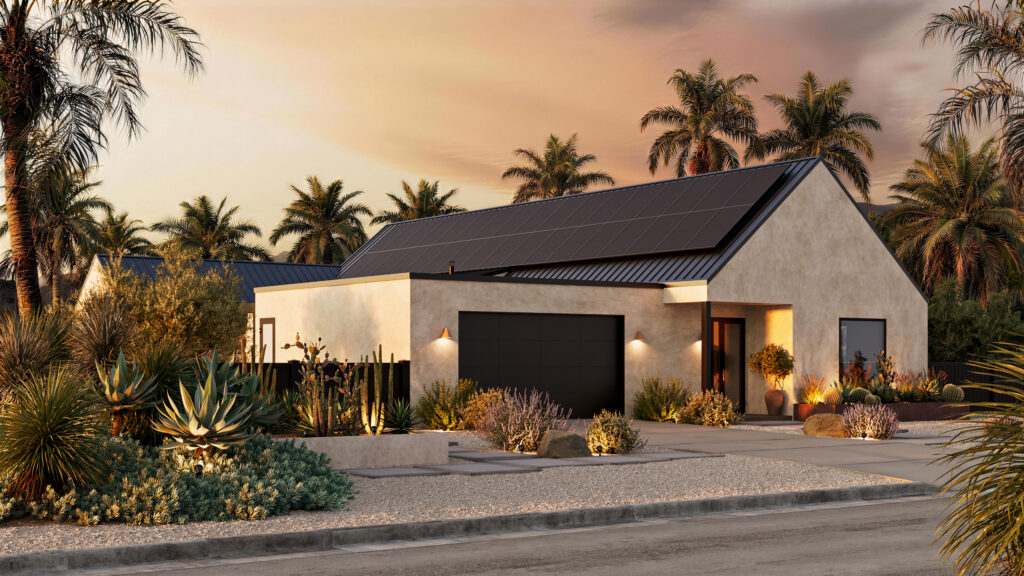
Momo Plus ADUs: Everything You Need. Nothing You Don’t.
March 6, 2026
For years, the standard knock on well-designed homes has been the price tag.
Beautiful architecture. Thoughtful engineering. Spaces that actually fit how people live. You could have all of it — if you had the budget for a full custom build and the patience for an 18-month timeline.
Everyone else got to choose between fast and good. Between attainable and well-designed. Between the home they wanted and the home they could afford.
That’s a false choice. And it ends today.
Meet Momo Plus
Momo Plus is our newest ADU line — built on a simple premise: great design should be attainable. Not aspirational. Not someday. Now.
We’re launching with three models. Each one is precision-engineered, factory-built, and designed to go from permit to move-in in months, not years. Each one delivers the modern architecture and structural integrity Momo is known for — in a footprint and at a price point that opens the door to a new kind of ownership.
Seed Studio. Our entry point into attainable modern living. 400 square feet, starting at $84,000. Compact, efficient, and beautifully considered — designed for the property owner who wants maximum impact on minimum footprint.
Seed 1 Bedroom. More room to live. 563 square feet, starting at $103,000. A full bedroom, a real kitchen, and a layout that works for long-term rental, a resident family member, or a guest who stays a while.
Seed 2 Bedroom XL. The flagship of the line. 834 square feet of conditioned living space, starting at $134,000. Two bedrooms, room to breathe, and every inch engineered with the same cold-formed steel panels — machined to within 1mm — that define every home we build.
Same modern architecture across all three. Same structural integrity. Same factory-perfect build process.
Everything you need. Nothing you don’t.
The Property You Already Have Is More Valuable Than You Think
Most homeowners sit on more opportunity than they realize.
A backyard that’s sitting empty. A lot with room for a second structure. A property that could generate rental income, house a parent, welcome a long-term guest, or open a door to short-term hospitality — if only there were a smart, beautiful, attainable structure to put on it.
Momo Plus is that structure.
It’s designed for next-generation homeowners and property owners who want a beautifully designed space without the complexity, the delays, or the cost overruns that define traditional ADU construction. You get what you need. You don’t pay for what you don’t.
What You Can Do With a Momo Plus
The use cases are as varied as the people buying them.
Rental income. A well-designed ADU commands a premium in any rental market. The Seed 1 Bedroom and 2 Bedroom XL are built for long-term tenants who want more than a converted garage — and will pay accordingly.
Multi-generational living. Keep family close without sacrificing privacy. The Seed 1 Bedroom gives parents or adult children a space that’s genuinely theirs. The 2 Bedroom XL gives you room for a whole family.
Guest house. The Seed Studio’s 400 square feet are compact, considered, and designed to make people feel genuinely welcome — not just accommodated.
Hospitality expansion. For property owners running boutique stays or outdoor hospitality operations, Momo Plus delivers the design quality guests expect and the build speed the business demands — across all three models.
Attainable Isn’t a Compromise. It’s a Design Decision.
Is it a full Momo home, or a more attainable one?
It’s both.
Every Momo Plus unit ships with the structural integrity, the modern design language, and the factory-perfect construction process that Momo is known for. The spec is leaner — intentionally. Because Momo has always believed that great design is an act of discipline, not excess.
Attainable doesn’t mean lesser. It means precise. It means nothing wasted. It means a home designed around what you actually need — and the confidence to leave out everything you don’t.
That’s not a compromise. That’s the point.
For Builders: A New Market. The Same Edge.
If you build with Momo, Momo Plus opens a segment you may not have been able to serve before — property owners who want a premium ADU but can’t justify a full new home budget.
The demand is real. ADU permitting is up across every major market. Municipalities are actively clearing the regulatory path. The buyers are there. And they’re not looking for a cheap structure — they’re looking for attainable quality they can actually trust.
With Momo Plus, you can deliver a precision-built, architect-designed ADU faster than your competitors can finish the framing on a stick-built unit. That’s a conversation starter — and a closer.
Momo Plus Is Available Now
All three Seed models are available to configure now — the Studio at $84,000, the 1 Bedroom at $103,000, and the 2 Bedroom XL at $134,000.
A new kind of attainable modern living. If you’re a property owner ready to put your land to work — or a builder ready to add a high-margin ADU to your lineup — this is where it starts.
Downsizing is simple in theory. Move to a smaller place, take fewer things, enjoy your lighter life.
In practice, it’s more like trying to edit a novel where every sentence is a family memory.
So let’s make it doable.
This guide walks you from “we should probably downsize” to “we are drinking coffee in our new place and I can actually find the mugs.” Along the way, you’ll get a system for decluttering, a moving plan that avoids the classic problems, and a few ways to downsize without leaving the neighborhood (hello, ADU life).
Quick note: local rules, permits, and taxes vary a lot. Use this as a smart starting point, then confirm the details with local pros where needed.
The big idea: downsizing your home isn’t about less, it’s about enough
Most people don’t want “smaller.”
They want easier.
Less maintenance. Lower bills. Fewer stairs. More time. Fewer things to trip over at 2 a.m.
That’s why a bunch of retirement and personal finance advice calls out downsizing as a way to reduce housing costs and home maintenance, but also reminds people it’s not always the right move for everyone.
The catch-22: ADU rules are hyper-local. Set expectations accordingly.
Path D: Build a right-sized home instead of hunting for one
Sometimes the market is weird. Sometimes “smaller” is more expensive. Sometimes every listing needs 12 renovations and a spiritual cleansing.
Building can make sense if you want a layout that fits your life now, and later.
(We’ll come back to this in the bonus section.)
Your next chapter deserves a great home.
Smart, stylish, and solar-ready — Momo’s panelized home kits are built for people who want to right-size without compromising. Take a look at what’s possible.
New stuff you didn’t plan to buy (curtains, rugs, a shower rod you swear was “standard”)
Ongoing costs
Mortgage or rent
Utilities
HOA fees
Maintenance
Insurance
Tip: If you’re moving to a smaller home but a pricier area, your monthly cost might go up. That’s not “wrong.” It just means your goal might be lifestyle, not savings.
Step 4: Declutter with a system (not a feeling)
“Just start decluttering” is advice in the same category as “just relax.”
Let’s do something more practical.
The 5-bin method (fast, simple, repeatable)
Label five bins or areas:
Keep
Sell
Donate
Recycle
Trash
Handle each item once.
If you set it down, it should land in a bin.
If you want a great, practical guide to getting rid of basically anything, Consumer Reports has one.
Start with low-sentiment zones
Do these first:
Pantry and fridge (check dates, be brave)
Linen closet
Duplicates drawer (yes, you own five can openers)
Garage corner of mystery
Save these sentimental items for later:
Photos
Heirlooms
Letters
The box labeled “Important” (which is never important)
The “container rule” (aka your new best friend)
Your new home has a certain amount of space.
Your stuff must fit inside it.
Not by force.
By choice.
Pick a container size (one bookshelf, one closet section, one kitchen drawer). Whatever doesn’t fit gets sold, donated, or recycled.
FMCSA notes that interstate movers must be registered and have a U.S. DOT number.
Binding vs non-binding estimates
This matters because it affects what you can be asked to pay at delivery.
Estimate type
What it means
What to watch for
Binding
Price is locked (unless you add services)
Make sure everything is listed in writing
Non-binding
Final cost can change based on actual weight and services
Be prepared for the bill to be higher than the estimate
FMCSA explains the “110% rule” for non-binding estimates: at delivery, you generally can’t be required to pay more than 110% of the non-binding estimate to get your shipment, with remaining charges billed later. If you want the exact details, FMCSA lays it out in their estimating charges guidance.
Red flags (trust your gut)
No in-person walkthrough or detailed inventory, but they give a “great” price anyway
Clean it. Bundle it. Make it easy for the next person.
Step 11: Unpack like a minimalist (even if you’re not one)
You don’t have to become a minimalist. You just need a few minimalist habits.
Unpack in layers
Essentials first
Daily-use items next
Everything else only if it earns its way into your life
The “one box quarantine” trick
Pick one box of borderline items.
Label it “Quarantine.”
If you don’t open it in 60 days, donate it.
Yes, it feels ruthless.
No, you won’t miss 90% of it.
Bonus: Downsizing with an ADU or a right-sized new build
Sometimes downsizing isn’t “move away.”
Sometimes it’s “build the right thing, right here.”
Why people downsize into an ADU
Stay in your neighborhood
Keep family close, but not too close (important nuance)
Create rental income potential
Reduce stairs, maintenance, and energy use
If you’re exploring this route, Momo’s ADU lineup spans roughly 393 to 1,120 sq ft, from studio layouts to 2-bedroom options. See the full catalog of Momo homes and ADU designs, or peek at a few examples:
If you’re starting from scratch and doing it thoughtfully, 6 to 12 weeks is a common range for decluttering + planning. If you’re on a tight timeline, you can do it faster, but you’ll want more help and fewer “maybe” piles.
What if I’m downsizing and I feel weirdly sad about it?
Completely normal since downsizing is change. AARP has a thoughtful piece on coping with downsizing that helps if you’re feeling that emotional whiplash.
How do I reduce fall risk in my new home?
Clutter reduction helps more than people think. For practical room-by-room ideas (grab bars, lighting, removing throw rugs), the National Institute on Aging has a great guide: preventing falls at home.
Both can help you avoid traditional construction purgatory. Both are constructed — at least partially — in a factory. And both get thrown under the prefabricated home umbrella in a way that makes them seem almost exactly alike.
Spoiler alert: They’re not.
Panelized homes and modular homes work differently, cost differently, and perform differently over their lifespans.
If you’re a homeowner weighing one against the other or just trying to wrap your head around what you’re actually buying — here’s the no-spin comparison.
Panelized vs modular: quick comparison
Aspect
Panelized
Modular
Traditional
Build time
6–12 weeks kit; ~3 weeks to lockup on site
3–6 weeks factory; crane day + finishing
7–12 months
Design flexibility
High, not limited by transport dimensions
Moderate, constrained by module/road specs
High
Framing material
Cold-formed steel (Momo) or wood (others)
Typically wood
Typically wood
Foundation
Concrete-free helical pile (Momo) or slab
Concrete piers or slab
Concrete slab
Transport
Flat panels on standard trucks
Oversized loads; cranes; road escorts required
N/A, built on site
HOA treatment
Treated as standard residential construction
Sometimes faces classification resistance
Standard
Financing
Standard mortgage pathways (Fannie Mae–eligible)
Some lenders treat as non-standard
Standard
Long-term value
High, durable materials, low maintenance
Moderate
Varies
What is a panelized home?
A panelized house is constructed from sections (wall panels, floor system, roof trusses) built at a factory and delivered flat to your build site, where they’re put up and assembled.
You can think of it like a precision-engineered kit: sections are built in the factory on your timeline, then delivered to your property where they’re assembled by a local crew.
The key term here is precision. Factory manufacturing means that panels are measured, cut and assembled to perfect specs before they arrive onsite.
In Momo’s case, that’s accurate to within a millimeter per 12 feet of wall. Try getting that kind of accuracy when you’re framing walls in the rain.
Interior finishing occurs on site, which is important than it sounds. Local building officials will be able to inspect your house throughout the building process (and not just once it’s finished), coordinating with local building codes will be a breeze.
It also means your house can be adjusted in real time if your construction site throws a curveball (they always throw curveballs).
Factory-perfect homes. Delivered to your site.
Momo’s panelized steel system is faster than traditional construction, more flexible than modular, and built to last well over a century. Let’s talk about your project.
A modular house is built differently. Instead of shipping flat components, modular construction involves a factory building fully assembled room-sized boxes, complete with walls, flooring, and sometimes interior finishes, that get trucked to your construction site and craned onto a foundation.
The factory work is real and the quality can be solid. But modular homes live and die by logistics. We’re talking oversized loads that require road escorts, crane access on your property, and route planning that can get complicated fast.
Fine Homebuilding documented a real-world modular delivery where a module was too tall for the homeowner’s driveway and required an empty lot half a mile away just to reload.
That’s not a horror story, it’s just the reality of moving room-sized boxes down public roads.
Construction speed: fast vs. faster (but context matters)
Modular is faster for the factory portion. A modular home’s boxes can be built in as little as three to six weeks. Panelized construction runs six to twelve weeks from kit production to on-site assembly.
Honest enough. But that’s not the whole picture.
Site prep, foundation work, permitting, and interior finishing happen no matter which method you choose. When you add those up, total construction time converges more than the factory-build comparison suggests.
A panelized steel home can reach a sealed, locked-up shell in about three weeks on site, faster than the four to six months most generic sources throw around for “prefab.”
There’s also something to be said for the extra on-site time that panelized construction involves. It creates more opportunities for inspections, adjustments, and quality checks.
Speed is great. Speed with quality is better.
Design and customization: where panelized wins
This one isn’t close.
Modular homes are constrained by what can be built in a factory box and driven down a highway.
Module dimensions are set by road transport limits. Floor plans are drawn from a factory catalog. Modifications after specs are locked tend to be expensive or impossible.
Panelized homes aren’t limited by any of that. Panels ship flat on standard trucks, which means designs can be as varied as the architect wants them to be.
Got a narrow lot? Mountain property with a tricky access road? A modular truck probably can’t get there. A flatbed with panels usually can.
The design range speaks for itself. A panelized system can produce a compact 393 sq ft ADU studio and a 3,671 sq ft two-story family home using the same core construction approach. That’s flexibility modular has a hard time to match.
Steel vs. wood framing: the overlooked variable
When people compare panelized vs modular, they treat both as interchangeable categories. But the framing material is its own decision, and it matters quite a lot for how your home performs over decades.
The majority of panelized homes and modular homes are built using wood framing.
Wood makes sense. It’s the most common building material known to man. It’s easy to work with and relatively inexpensive when considering material costs.
Beware, however: wood wraps and decays. Termites like to eat it. It’s flammable. And it must be maintained to prevent moisture intrusion and structural failures.
Cold-formed steel framing is a different category entirely.
Feature
Steel Framing
Wood Framing
Lifespan
50–100+ years
40–60 years
Fire resistance
Non-combustible
Burns
Pest resistance
Termite-proof
Vulnerable
Rot/warp
None
Susceptible
Weight
~25% lighter
Heavier
Maintenance
Very low
Medium to high
Steel doesn’t warp, melt, split or crack. It won’t give termites a foothold. Moisture and mold is way less of a concern with steel framing behind the drywall.
Unlike wood, cold-formed steel panels allow for extremely precise manufacturing, something you just can’t match with on-site wood framing. Which means tighter seals, better insulation performance, and more predictable structural integrity.
When comparing panelized homes, ask your builders what they’re building with. Construction method and material are two different variables. Material matters when it comes to the performance of your home for the next hundred years.
Foundation options
Most modular and panelized homes end up on concrete piers or a slab. It works. Everyone is familiar with them. It’s also… kind of a carbon-heavy habit.
Concrete’s got high embodied carbon, it needs cure time, and in places with floods or cranky soil, it can be a long-term “hope this stays put” situation.
If you want a cleaner, faster foundation, steel helical piles are hard to beat. Momo’s Surefoot system skips concrete entirely, doesn’t need curing, and it’s engineered for uplift, shear, and moment loads. The crew can usually knock it out in an afternoon.
And yeah, it sounds like a nerdy detail until you realize concrete footings are basically the default because they’ve always been the default. There’s no law of physics that says your house has to start with a giant pour.
Cost, financing, and long-term value
Here’s the rough math (it varies by market, but this is the ballpark):
Modular: ~$50–$100/sq ft base, ~$80–$160/sq ft finished
Panelized (shell): starts around ~$110/sq ft
Traditional (2025):~$150–$300+/sq ft
So yes, modular can be cheaper upfront on a straightforward build.
But the price tag isn’t the whole story. Steel framing usually means fewer long-term headaches (less rot, fewer pests, fewer “why is this cracking?” surprises). Pair that with high-efficiency systems like heat pumps, hybrid water heaters, and solar-ready design, and you’re saving money the first month you move in, not year ten.
Insurance: Both are generally insurable under normal homeowner policies. Steel framing often helps on the risk side (non-combustible, pest-resistant, precisely engineered).
HOAs: Panelized usually passes the “looks like every other house” test. Modular sometimes gets pushback because of classification baggage, even when the quality is there.
Sustainability and waste reduction
Both methods outperform traditional construction on waste by a lot. When you’re cutting and assembling components in a controlled factory environment instead of out on a muddy job site, you just produce way less scrap.
A 2021 peer-reviewed study in Resources, Conservation and Recycling found that prefabrication delivers about a 15% overall waste reduction compared to conventional construction. And that’s before you even zoom out to the bigger picture: the EPA found that traditional construction generated over 600 million tons of demolition and construction waste in the U.S. in 2018 alone.
Steel-frame panelized construction adds another benefit on top of that. Steel is fully recyclable, and a concrete-free foundation system avoids one of the most carbon-intensive materials commonly used in residential construction.
Then there’s performance over the long haul. Homes designed to net-zero standards, with tight envelopes, continuous insulation, and solar-ready infrastructure, can dramatically reduce operational energy use over their lifetime.
A 2024 report from the Northeast Energy Efficiency Partnerships (NEEP) backs up how practical this is. It says off-site construction methods can meet both Passive House and DOE Zero Energy Ready Home standards through precise manufacturing, improved airtightness, and high-performance mechanical systems.
So this isn’t a “someday” scenario. With the right system, it’s achievable today.
Choosing between panelized and modular
If speed is your only concern and your house plans are simple, modular can make a compelling argument.
If you value design freedom, longevity, reduced maintenance, and a building process that cleanly weaves through traditional financing and permitting channels, panelized steel has the stronger case to make.
The prefab home universe is larger than it may appear. The materials you select for your home’s frame and foundation will dictate how it performs for years to come. Ask the tough questions before settling on a building method.
When Sara Lichfield arrived in Birmingham, Alabama, to see a completed Momo home for the first time, she wasn’t sure what to expect.
Her expectations were high, of course. But you never know what a home is like until you can walk through the door.
Until you can run your fingers along the countertops.
Close the cabinets.
Open the windows.
The stakes were especially high because Sara had already committed to buying several Momos for her properties in San Diego and in Fish Haven, Idaho.
“Too much rot with wood-frame products”
What had led her to Momo in the first place?
“I wanted panelized modular,” she said. “I wanted cold-formed steel.”
Why?
“Because I’ve just seen too much rot and too much warping and twisting with wood-frame products. Even in the three-month building season we have, there’ll be high winds, there’ll be soaking storms. Sometimes even in June we’ll get a snowstorm. And then your lumber is destroyed.”
Panelized construction made sense because the cranes required for modular installations posed a risk to the power lines near her build sites. And the workaround was expensive. “It was going to cost me tens of thousands of dollars,” she said.
So the answer was Momo Homes.
High quality. No cranes. Fast builds.
”Momo hit it all.”
“You could be dealing with AI”
We’re in an era where it’s hard to trust anything you see or hear online.
So before signing the sales document and committing to a purchase, Sara needed to make sure Momo was a real company. Her friends told her to be careful. Bankers warned her, “You could be dealing with AI.”
Many months earlier, Sara had seen a video of Momo co-founder and CEO Charles Gale at the International Builders Show in Las Vegas. So when she spoke to one of our sales representatives, she said, “I need to be able to see that the person who represented the real, built Umbra at the Las Vegas home show is connected to you and this document.”
A late-night call and an open-house revelation
Our sales rep put Sara in touch with Charles.
“It was late at night,” Sara said. “And I think he had just put [his son] to bed, and he was in the nursery or something when he called.”
“I’m Charles,” he said, “I’m not AI.”
Sara was convinced. She took the leap.
As she strolled from room to room at the Momo open house, each new feature was a revelation.
She loved the depth of the veranda. The light. The windows. She particularly loved the vaulted ceilings. She loved how the mini-split was recessed into the ceilings. She loved the quality of the hinges. The window hardware. She was delighted by how the door handles felt in her hand.
How was she feeling now about the leap she’d taken with Momo Homes?
“I’m all in,” she said.
“I’m all in.”
— Written by Jeff Williams, CMO, Momo Homes.
PS. Want to see the Birmingham project for yourself? Schedule an in-person or virtual tour now.
How cool is this? Three of Momo’s senior leaders — CEO Charles Gale, COO Ben Piggott, and board chairman Stewart Hall — met yesterday with Panama’s minister of trade and industries, Julio Moltó.
The Momo team was there to highlight the strategic importance of Panama to Momo Homes and the benefits Momo’s success can bring to the Panamanian economy.
In other words, Momo homes are designed better and built better so they feel better to live in.
Which sounds good. But what does it mean exactly?
Let’s take a closer look.
Foundation: Built to last up to 400 years
Our 100 percent steel footings system works like a tree’s deep root network, securely connecting the foundation to the earth while resisting gravity, uplift, shear, and moment loads. The system is rated to seismic category D, the “high hazard” level of coastal California construction. Expected life of the system? Up to 400 years.
Frame: Hurricane-ready
Steel framing is entirely fire-resistant, mold- and pest-resistant, and is 100 percent recyclable. This means all our homes meet top green-building standards. Our homes are built to Miami-Dade wind standards (able to withstand gusts of up to 185 mph).
Roof: 10-foot snow loads? No problem
Steel here, too. Unlike traditional roofing materials, steel won’t warp or sag. While our steel roofs are lightweight, they’re also highly durable — lasting more than twice as long as composite-shingle roofs. And because they’re chemical-free, recyclable, and virtually maintenance-free, they’re a sustainable choice. Our roofs are designed for snow loads up to 100 lbs. per square foot (that’s about 10 feet of average, settled snow).
Cladding: You’ll never have to paint again
Fiber cement board is a low-maintenance product that won’t warp, crack, or fade. Due to its weather- and moisture-resistance, it helps prevent mold, swelling and rot. Fiber cement board is durable against fire, water, and extreme weather conditions, and virtually impenetrable to pests. Plus, it’s durable, lasting 50 or more years. You’ll never have to paint again.
Heating and cooling: Save energy, stay comfy
Every Momo home is engineered for energy efficiency, from insulation to appliances. We use a high-performance Bosch heat pump and Rheem hot water heater. A smart ComfortLink thermostat tailors temperature and humidity settings, so you save energy without sacrificing comfort.
Fully electric: Never pay another energy bill
Momo homes are fully electric, which affords high efficiency and a low carbon footprint. In fact, a fully electrified home with high-quality appliances dramatically reduces, or can even eliminate, electricity bills. Fully electric homes offer resilience and peace of mind during blackouts, as well as letting you take full control of your energy future, without relying on the grid.
SPAN smart panel: Full control over energy use. All Momo homes come with a SPAN smart panel, facilitating full control over your electrical usage.
Solar panels: Real-time insights. We use high-efficiency tier 1 solar panels from brands like REC, Silfab and Q-Cell, paired with Enphase microinverters, capturing and optimizing sunlight, panel by panel. Everything is easily managed through the Enphase Enlighten app, giving you real-time insights, usage reports, and full control at your fingertips.
Battery backup: Power during outages. Any surplus energy is stored in the Franklin Whole Home battery system, ensuring power is always available, even during outages. Each battery is 15 kWh and is an entirely modular system, allowing you to add as much storage as you’d like.
EV charging: Charge when it’s cheapest. The SPAN smart panel provides a clear view of your home’s power flow, and EV-ready wiring means your electric vehicle can run entirely on solar energy. We offer the SPAN level 2 EV charger that integrates with the SPAN smart electrical panel, allowing you to use excess solar to charge your EV and charge when it’s cheapest.
Extras: The beauty is in the details
Every Momo model offers: nine-foot ceilings, solid-core doors, heated towel racks, and aluminum window frames. Plus: fully assembled, custom made-to-order cabinetry designed to last a lifetime.
The Momo Max package includes Bosch appliances and heated floors.
Single-family-home models include laundry rooms, full-size primary bathrooms, and walk-in closets.
 Designs
 Elements
 Builders
 Home Buyers
 Technology
 About Us
 Blog
Blog